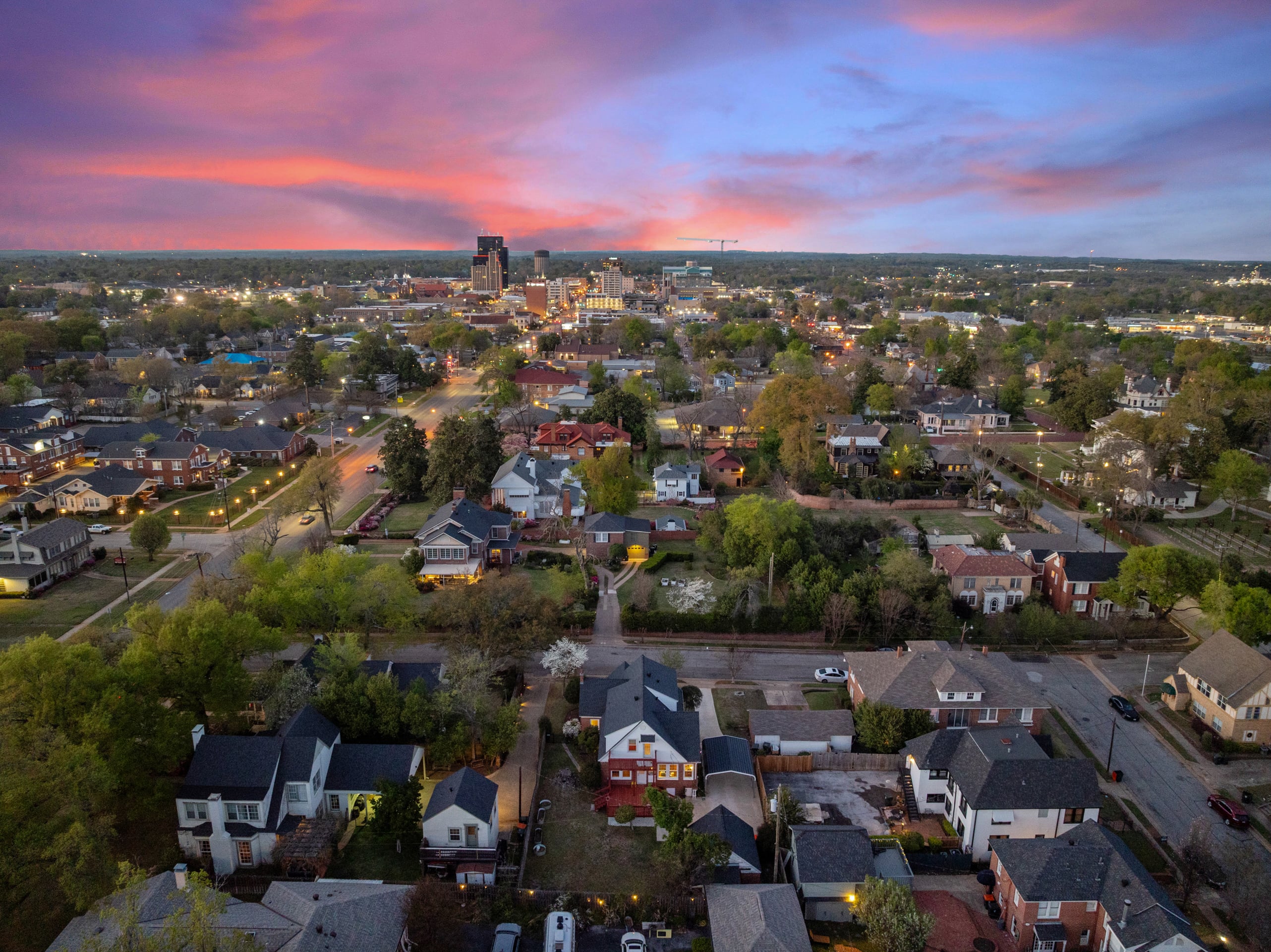
Most people who move to Tyler, Texas already know a few things going in. They know it's the Rose Capital of the World. They know there's a Chick-fil-A on every corner. They know it's not Dallas, and that's at least partly the point.
What they usually don't know is what it actually feels like to live here six months after the boxes are unpacked. That's what this is about.
Tyler is bigger than it looks on a map
If you've never spent real time in East Texas, you might picture a small town with a Walmart and a Dairy Queen. Tyler is not that. The metro area pushes toward 250,000 people. There's a hospital complex — UT Health — that draws patients from four states. There are two universities, a regional airport, and enough retail that people in surrounding counties drive here on purpose.
It doesn't feel big, though. That's the thing. The pace is slower, the traffic is manageable by Texas standards, and you can still run into someone you know at the grocery store. It occupies a strange middle space — large enough to have most of what you need, small enough to still feel human.
That combination is exactly what draws people here, especially from the DFW Metroplex.
The DFW migration is real and it's changing things
For the last several years, Tyler has quietly absorbed a steady stream of buyers from Dallas, Frisco, McKinney, and surrounding suburbs. Some are remote workers who realized they could buy twice the house for half the price. Some are retirees. Some are families who just got tired of the noise.
Most of them show up expecting everything to cost less. And it does — sort of. The housing is genuinely less expensive than North Texas. But East Texas property taxes, insurance rates, and the cost of maintaining a rural or semi-rural property can catch people off guard. A 10-acre tract with a pond sounds idyllic until you're paying a well company, a septic company, a fence guy, and a hay guy, all in the same month.
"Tyler occupies a strange middle space — large enough to have most of what you need, small enough to still feel human."
The schools conversation
Tyler ISD is a large urban district with the challenges that come with that. Some buyers dismiss it without looking closely. That's a mistake in both directions — there are strong programs within the district, and there's also real variation between campuses.
Many families buying in Tyler are also buying in Chapel Hill ISD, Bullard ISD, Whitehouse ISD, or Lindale ISD — districts that sit just outside city limits but within easy commuting distance. This is one reason so many buyers end up in unincorporated areas rather than inside the city itself. They want Tyler's proximity without Tyler ISD's attendance zones.
It's worth knowing this going in, because it shapes the entire search. A buyer who insists on "Tyler" may actually mean "15 minutes from Tyler" once you explain how the district lines fall.
What people love about living here
The land. More than anything else, this is what people move to East Texas for. You can still buy acreage here at prices that make Dallas people do a double take. Ten acres. Twenty acres. Old farmhouses with ponds and deer and a view that doesn't include another roof. That kind of space is increasingly rare in Texas and Tyler still has it within reasonable reach of town.
The community infrastructure is also genuinely good. Tyler has a real arts scene, a surprisingly strong food culture for its size, and UT Health is a legitimate regional hospital system. People who move from larger cities sometimes expect to sacrifice medical quality. Many of them are relieved to find they don't have to.
And then there's the pace. It's hard to describe until you've lived it. Things move slower here. Not in an aggravating way. In the way that means people hold the door open, and your neighbor waves when they drive by, and the Friday night football game is still something the whole town shows up for.
What people struggle with
The heat. Summers in East Texas are humid in a way that North Texas isn't. Dallas is hot and dry. Tyler is hot and wet. July feels like standing inside a greenhouse. People from the Southwest adjust poorly. People from the Gulf Coast shrug and carry on.
The options for certain things are still limited. If you're used to a big city's breadth of restaurants, specialty retail, or entertainment venues, there's an adjustment period. Tyler has gotten better every year, but there are gaps. People still drive to Dallas for concerts, certain medical specialists, and airport convenience — though East Texas Regional handles a surprising amount of regional traffic.
And the traffic, while nothing like a major metro, has gotten noticeably worse. The Loop runs around the city and helps, but South Broadway and Old Jacksonville Road can be genuinely slow during peak hours. If you're commuting to a job in town from a rural property 20 minutes out, add time for country roads that don't always cooperate.
"You can still buy acreage here at prices that make Dallas people do a double take. That kind of space is increasingly rare in Texas."
The thing that surprises people most
They stay.
That sounds obvious, but it's worth saying out loud. A meaningful number of people who move to Tyler expecting to try it for a year or two end up putting their kids in school here, joining a church, getting involved in things. East Texas has a way of getting into people. The slower pace stops feeling like a sacrifice and starts feeling like the actual point.
It doesn't happen for everyone. There are buyers who last eighteen months and then head back toward a city. But more often than not, the people who come here wondering if they'll fit in eventually stop wondering.
What this means if you're buying here
Know your priorities before you start. Tyler means different things depending on whether you want walkability, acreage, top-rated schools, easy commutes, or land investment potential. This is not a market where one answer fits every buyer.
Talk to someone who actually lives here and has been doing deals here long enough to know how the different pockets behave. The market has layers, and a lot of the important stuff doesn't show up in a Zillow search.
The short version: Tyler is a real place. It has tradeoffs like anywhere else. But for a lot of people, it turns out to be exactly what they were looking for without quite knowing it.
Explore East Texas here
FAQ Section
What is it like living in Tyler, TX? Tyler is a mid-size city of around 250,000 people in East Texas. It has a slower pace than Dallas, strong community ties, good medical infrastructure through UT Health, and access to rural land at prices that have largely priced out North Texas. Summers are hot and humid.
Is Tyler, TX a good place to raise a family? It depends heavily on which school district you're in. Tyler ISD serves the city proper, while Whitehouse, Bullard, Chapel Hill, and Lindale ISDs are popular alternatives for families buying in the surrounding area. Many families buy in Tyler's metro but outside city limits specifically for school district reasons.
How far is Tyler, TX from Dallas? About 100 miles east on Highway 20, roughly 90 minutes without traffic. Many people make this drive regularly, though commuting daily long-term is uncommon.
Is Tyler, TX growing? Yes. It has seen consistent growth from DFW relocation, driven by remote work, lower housing costs, and quality of life factors. South Tyler has seen the most new development and infrastructure investment.
What are the best neighborhoods in Tyler, TX? Hollytree, the Crossing, Oak Creek, Guinn Estates, the Azalea District and the Cascades area in South Tyler are among the most established and sought-after. Demand is high and inventory tends to be tight. North and east Tyler offer more affordability and, in some areas, investment upside.
Check out this article next